What Is Student Life Like in India for International Students? (2026)
Written by Priya Sharma, Senior International Admissions Consultant | Most recent update: June 08, 2026
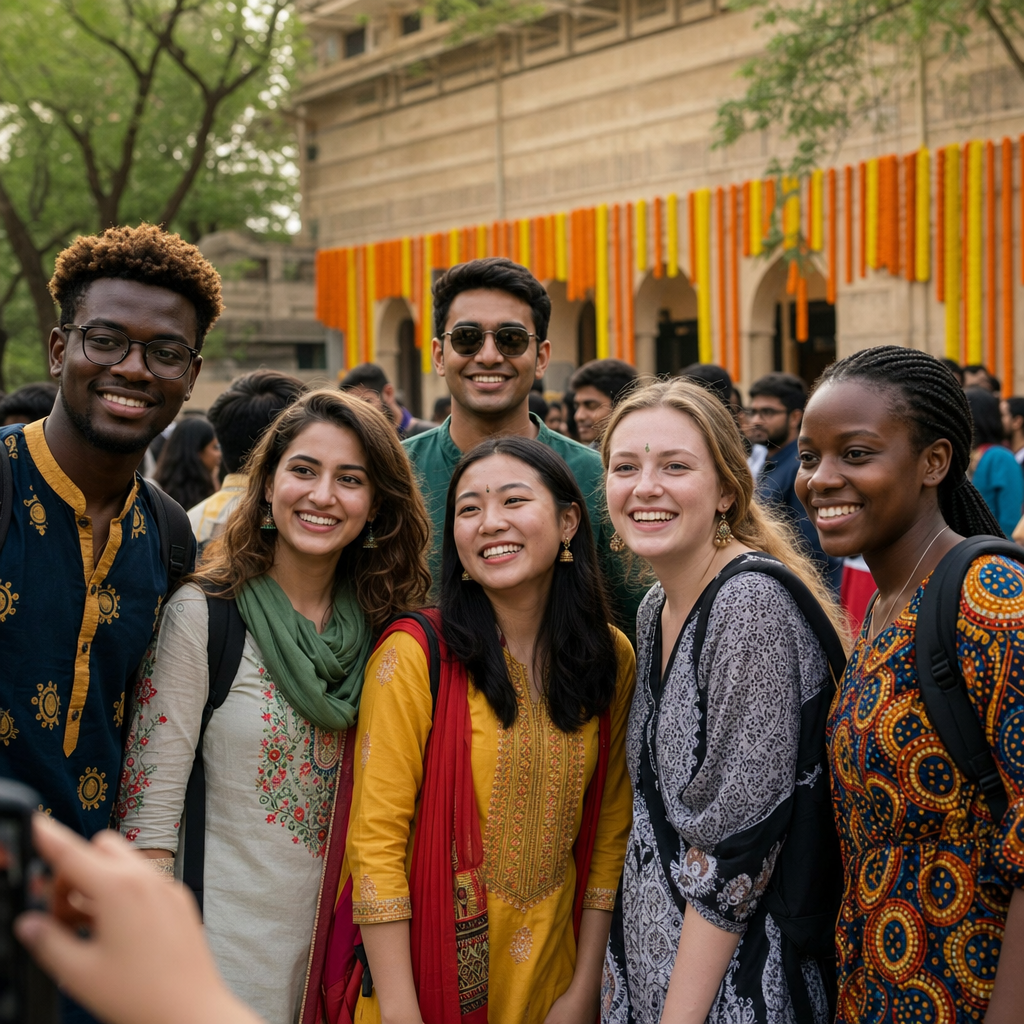
What student life in India really looks like
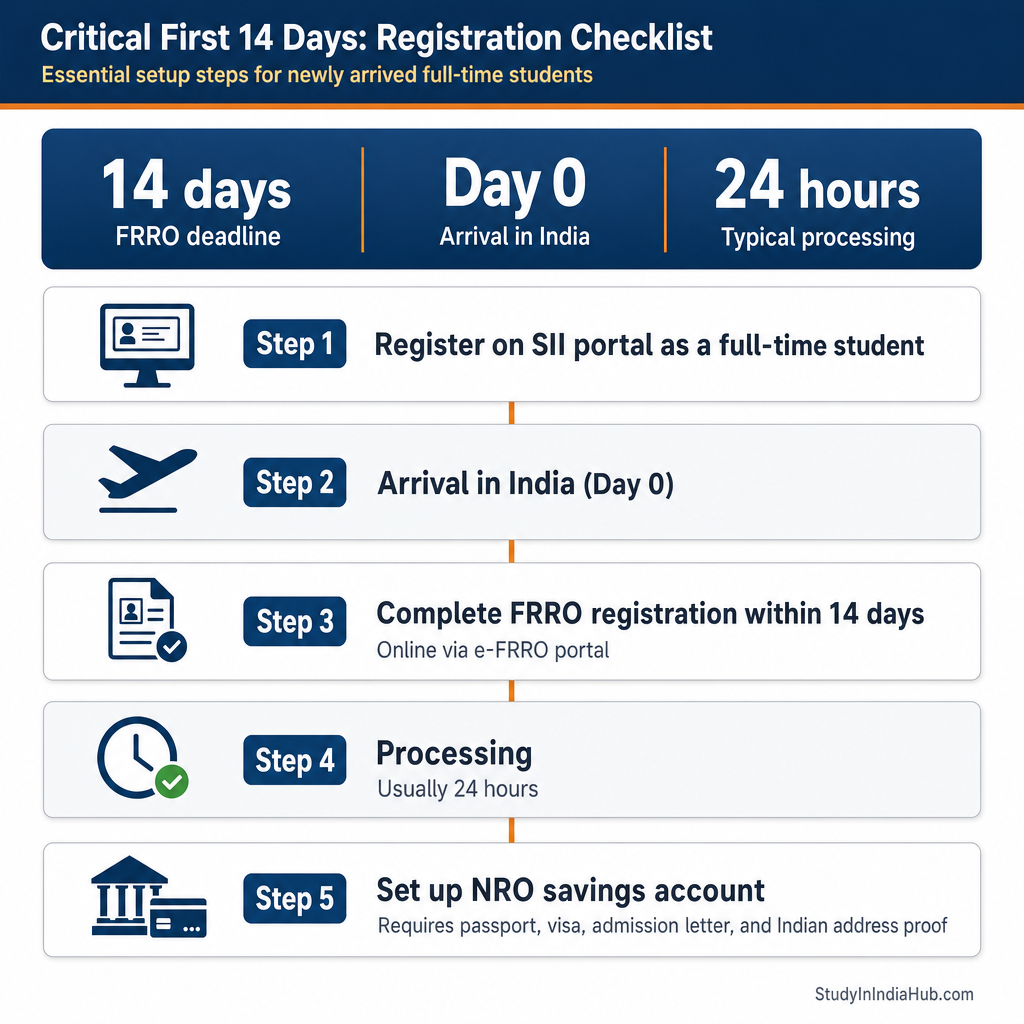
Student existence in India fuses intense academics, lively campus environment, economical living, and a varied global community. Numerous students manage with ₹15,000–₹30,000 monthly (educations.com). I have led students through this many times. The researchers are demanding. Mornings start at dawn. Educators favor critical thinking instead of memorization. Attendance is tracked closely. The FRRO registration timeframe is the phase that numerous students underestimate. Staff at institutions like SPPU and Mumbai University recognize the identical problem. You must register within 14 days of your arrival (MEA India). Many students delay it while they acclimate to their living arrangements.
The two most common document errors are simple:
- The address listed on your housing permit does not match your current residence. - The visa you possess does not align with the length of your program. Fix both before you arrive. It avoids weeks of revisions later. The documents seem daunting. Upon grasping the process, it’s straightforward: - Register on the SII portal as a full-time student (immitalks.com) - Complete FRRO registration within 14 days, mainly online with processing taking 24 hours (e-FRRO Portal) - Set up a necessary NRO savings account (RBI / DNA India) Please note that you cannot work part-time. Only internships approved by the university are allowed (Careers360).
A typical day on campus
A standard day adheres to the campus schedule. Upon noticing the pattern, it is easy to picture. Your day starts around 7:00–8:00 AM in your residence hall. Breakfast includes poha or parathas in the dining hall. After that, you attend class. Most public universities schedule important lectures between 9:00 AM and 4:00 PM (Study in India). These state universities provide almost 90% of all educational programs in India.
Here's how Indian universities split by type and enrolment:
| Metric | Government universities | Private universities |
|---|---|---|
| Share of universities | 58.6% | 41.4% |
| Share of total enrolment | 73.7% | 26.3% |
Public universities in India represent 81% of overall student enrollment in Indian institutions (cdnbbsr.s3waas.gov.in).Most classmates are likely to be college students. Roughly 78.9% of learners are registered in undergraduate courses, whereas 12.1% are pursuing postgraduate studies, based on the AISHE 2021-22 report. Your usual obligation is the 75% attendance generally needed to uphold your S-1 visa status. Students who adapt rapidly keep their copy of the passport, admission letter, and FRRO documents organized in one folder right from the start. During breaks, people gather in the cafeteria. A samosa or tea costs under ₹50. Below is the expense summary for 2026–27:
| Expense | Estimated Cost | Frequency |
|---|---|---|
| Hostel & Mess (standard) | ₹1,000 – ₹3,000 (Study in India) | Monthly |
| BITS Pilani hostel fee | ₹36,000 (BITS Pilani) | Per semester |
| Hostel & mess (annual range) | ₹40,000 – ₹2,50,000 | Yearly |
| Living expenses | $15,000 – $25,000 (Immitalks) | Yearly |
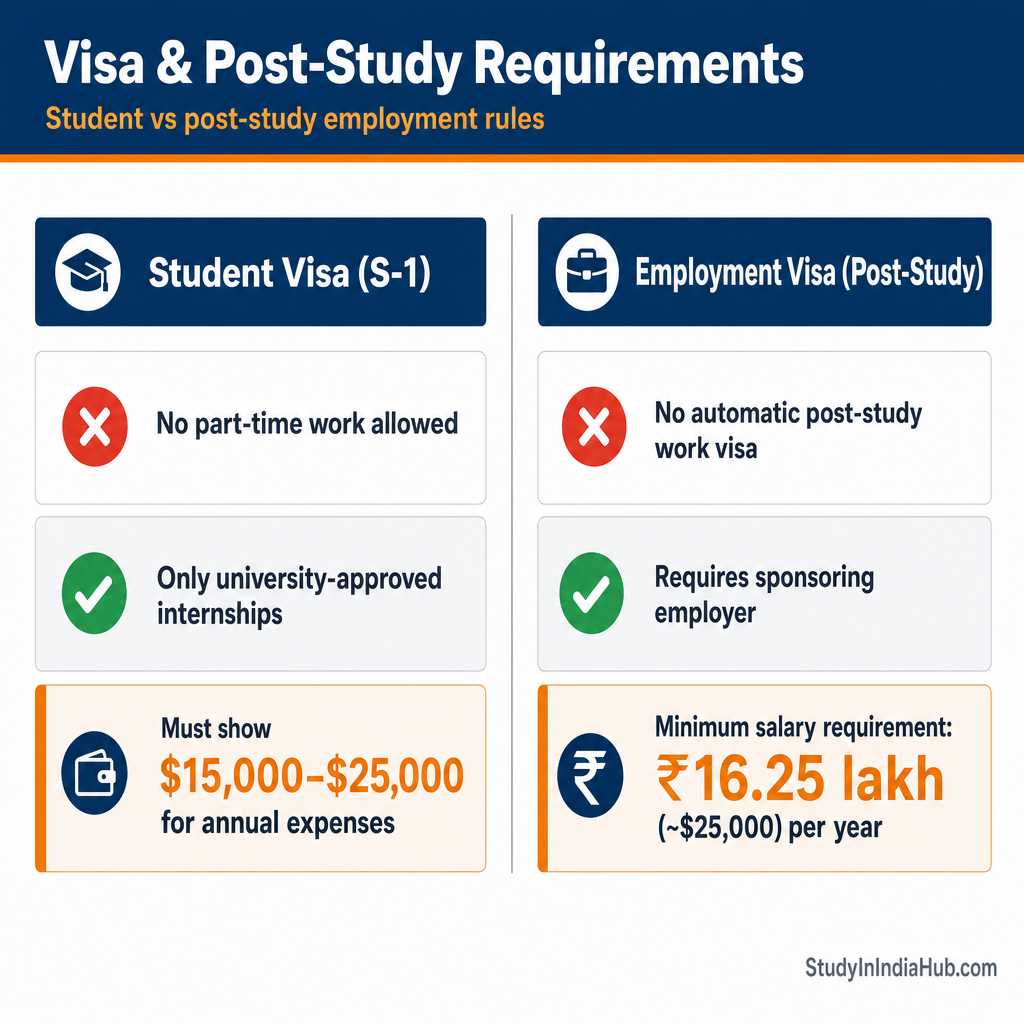
Library or lab afternoons commence. Since you're unable to pursue part-time jobs, this period should be dedicated to revising notes, finishing assignments, or engaging in approved internships, which are allowed only if they are part of your curriculum (Bureau of Immigration). To confirm that your technical program is approved, check the AICTE 2023-24 EOA report (npti.gov.in). By 6:00 PM, the meeting location on campus gets busy. It's a great place to improve your English or Hindi skills, which helps in getting ready for the job market. The night usually wraps up at the hostel by the 9:00–10:00 PM deadline. Check yours in the first week. There is no automatic post-study work visa. To stay, you change to an Employment Visa with a sponsoring employer paying at least ₹16.25 lakh (~$25,000)/year (Gloroots).
Campus culture in cities like Mumbai and Pune
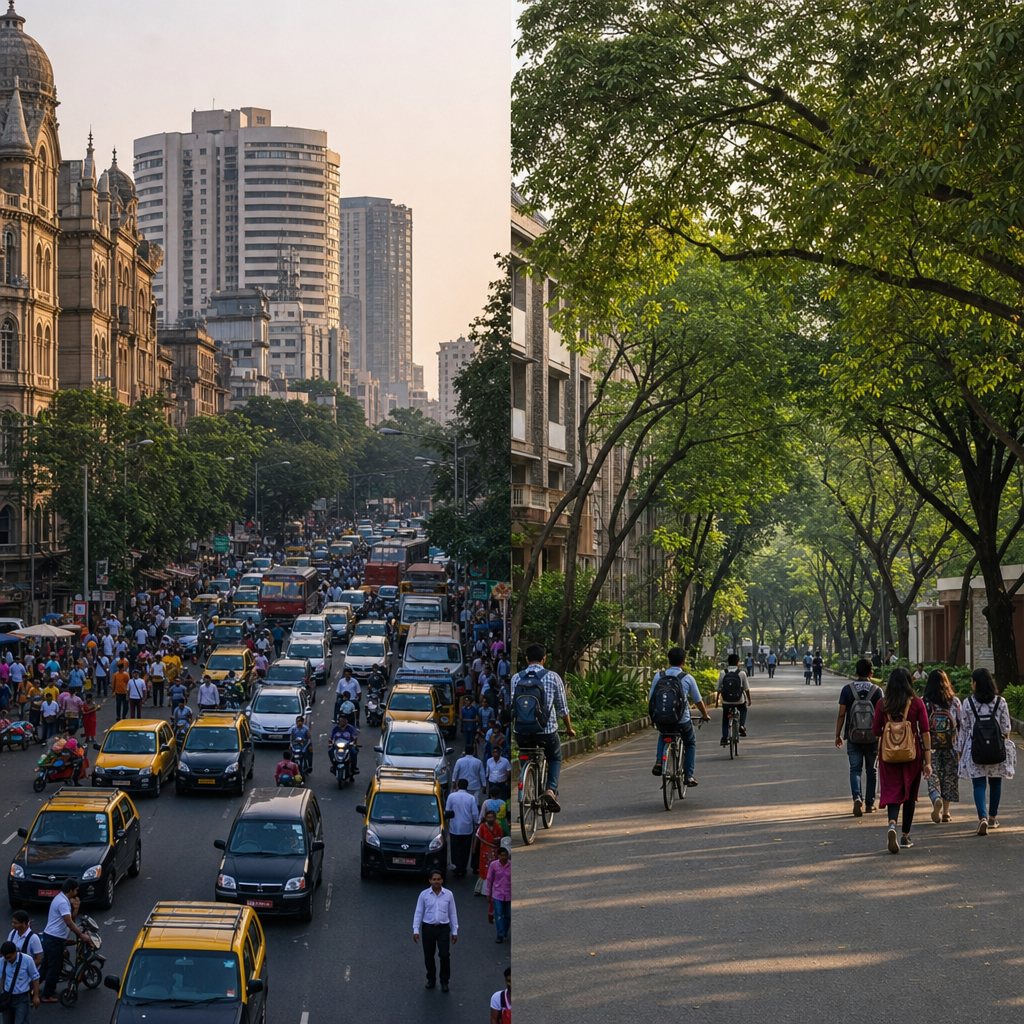 Mumbai and Pune each have a lively student culture, but they possess different atmospheres. Pune is the calmer educational city. All revolves around the academic calendar. Mumbai is faster and broader. Students build their social connections influenced by their college, residence hall, travel path, and neighborhood rather than just the campus. The city impacts the ability to participate in clubs and uphold a routine. Students who adapt rapidly select a single academic group, a cultural community, and a regular circle of friends during the initial month.
| City | Campus feel | What students notice first |
|---|---|---|
| Mumbai | Fast, urban, spread out | Bigger city energy, more commuting, more off-campus social life |
| Pune | Student-centered | Strong university community, easier to build routine |
Numerous universities organize "fests," substantial cultural competitions where international students often lead the dance and food stalls. In Pune, learners start at the International Centre before splitting into academic factions. In Mumbai, the usual starting place is frequently departmental meetings, then city groups.
Cost of living shapes social life
Review the budget categories for students, rather than the pictures in the brochure. They influence the frequency with which you can join paid events, eat out after festivals, or travel on weekends.
| Lifestyle | Mumbai (INR/month) | Pune (INR/month) |
|---|---|---|
| Budget | 15,000 | 12,000 |
| Moderate | 25,000 | 20,000 |
| Comfortable | 40,000 | 32,000 |
Source: Compiled estimate, Mumbai, Compiled estimate, Pune
Peer communities and food
Both cities host dynamic student populations from Nepal and Sri Lanka. Facebook groups and organizations host Dashain and Tihar celebrations (Colleges Nepal). That density leads to the first months being easier to handle. In Mumbai, food customs integrate smoothly with student life. You'll find a wide range of halal cuisine at Mohammad Ali Road and Bhendi Bazaar (Mumbai University). Meal plans often transform into social events. India has the world's second-largest higher education system, with more than 800 universities (Study in India). That scale indicates more events and heightened competition for attention. If you wait for an invitation, you'll lose the chance to join the first wave of clubs. The advice is clear: get involved early, show up two times, and avoid waiting for total assurance.
Food, festivals, and fitting in
Culinary events and festivities are the fastest ways to feel a sense of community. Dietary issues, the main challenge encountered by students from the UAE and SAARC nations, seldom turn into a real problem.
Vegetarian and halal options are easy to find
India incorporates vegetarianism into its cultural fabric instead of perceiving it as unusual. About 39% of adults in India identify as vegetarian (flavor365.com). Halal meat can be easily found in Mumbai and Pune, especially near major universities. Both cities have halal-certified restaurants and butcher shops. University dining halls offer options for both vegetarians and non-vegetarians. Here are the financial plans to consider in Mumbai:
| Food Category | Monthly Cost (INR) | Notes |
|---|---|---|
| University Mess | ₹3,000 – ₹5,000 | Veg + non-veg, fixed menus (University of Mumbai) |
| Eating Out | ₹6,000 – ₹12,000 | Halal and international cuisines (Compiled estimate) |
| Groceries | ₹4,000 – ₹7,000 | Local markets cheaper than supermarkets |
A full meal at a local restaurant ranges from ₹150–₹300 (roughly $2–$4). Pune is cheaper and smaller than Mumbai, but the variety is similar, featuring dosas, parathas, Chinese fusion, Lebanese, Thai, and street foods such as pav bhaji, samosas, and chaat. The real threat isn't an absence of plenty. It's lavish expenditure since all items are inexpensive and readily available. Notify your International Centre and hostel warden during the first week if you follow a vegan, gluten-free diet or have allergies. I have seen students with nut allergies arrange special meals with mess managers. It operates, but only if you communicate quickly.
Festivals you'll actually join
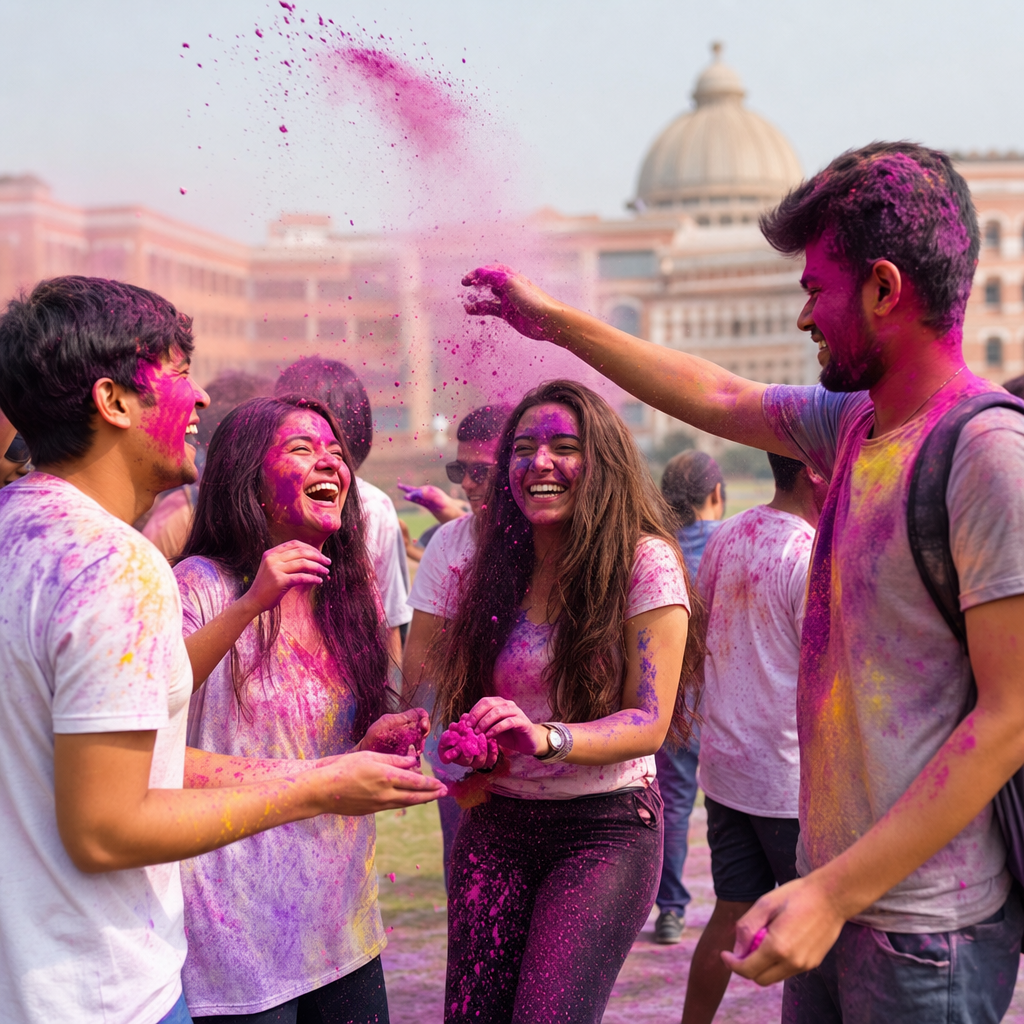
Diwali, Holi, and Ganesh Chaturthi are not simply passive events. They alter the campus. They also assess whether you feel included in the group or left out. - Holi (March), vibrant powders, water balloons, and sweets. The primary chance for international students.- Diwali (Oct/Nov) includes lights, sweets, shared meals, fireworks, and rangoli competitions.- Ganesh Chaturthi (Aug/Sep) is commonly observed in Maharashtra, showcasing parades and group prayers. At SPPU, the International Centre organizes festival activities specifically for international students. Participation is available to all, irrespective of Hindu beliefs. I have gathered students from Nepal, Bangladesh, and Nigeria who took part fully. Eid is observed on campus too, though in a more limited manner. Christmas is less festive than in Western countries.
Finding your own community
Your individual celebrations hold significance. At SPPU, Nepali students organize well-planned Dashain and Tihar festivities that include food, music, and prayers. This corresponds to the roughly 13,126 Nepali students who were enrolled in Indian higher education in 2022 (Colleges Nepal). Students from Bangladesh and Sri Lanka find existing communities. If you originate from Nigeria, Kenya, or Vietnam, you may have to create one. Identify your people in the first month. The most challenging adjustment isn’t connected to food. It's the pace and noise. Festivals improve both. Pune provides greater serenity than Mumbai for those in search of calm. Students struggling are those unready for the sensory overload and who didn't have a retreat space.
Getting around: transport and daily logistics
Monthly transport costs generally fall between ₹1,000 and ₹3,000 (NoBroker). It depends on how often you use the subway, buses, vehicles, or ride-hailing services. The cost appears slight until you factor in making two trips each day. The common mistake we notice is getting ready only for the journey between hostel and campus. Students overlook the routine trips to a bank, FRRO, or grocery store. Start by installing Uber or Ola. In Pune or Mumbai, these are the most secure modes of transport until you become familiar with the local auto-rickshaw rates. We once helped a Nepali student who was overcharged for a 2km trip because he failed to check the app's fare in advance. Use the app as a pricing guide, even when you hail a taxi on the street.
| Transport Mode | Best For | Typical Cost (Short Trip) |
|---|---|---|
| Metro | Avoiding traffic in Delhi/Mumbai | ₹10–₹60 |
| Auto-Rickshaw | Last-mile connectivity | ₹25–₹100 |
| Ride Apps | Door-to-door safety | ₹100–₹400 |
| Local Bus | Budget daily travel | ₹5–₹40 |
Municipal challenges are significant. In Delhi, the Metro acts as your vital assistance. In Pune, you'll rely on PMPML buses or shared auto-rickshaws. Safety ratings guide your choices at night. This is a contrast of the cities:
| City | Safety index | Source |
|---|---|---|
| Bangalore | 46.25 | Numbeo |
| Delhi | 41.0 | Numbeo |
| Pune | — | Numbeo |
| Mumbai | — | Numbeo |
A few rules for every newcomer:
- Keep one reliable app and an offline backup. You need a recovery method if your data is lost. 2. Share your live location during evening outings. 3. Obtain exact directions to the hostel or campus. Drivers respond better if you identify a specific gate or landmark. 4. Check your inbox daily for FRRO updates (Study in India). Students have overlooked deadlines while attempting to manage bus routes. Coming in by air from Kathmandu? Numerous daily options exist, featuring up to 70 flights weekly from Air India, IndiGo, Nepal Airlines, and SpiceJet (Trip.com). Arrange your first 7 days to get acquainted with your nearest metro station, bus stop, and safest taxi stand.
The international student community and support
You won't be alone here. That's the first point I bring up to every student worried about feeling alone. It happens in the same way repeatedly. The international student community picks up speed rapidly when you connect with it. We worked together with a Nepali student who arrived with minimal understanding of Hindi. In her second week, she joined three campus clubs. By the end of the semester, she helped in organizing the Holi festivity at the International Centre. The obstacle of language no longer appeared substantial. Engaging early, instead of focusing solely on skill, makes newcomers feel more at home. The AISHE 2021-22 survey reveals that India hosted approximately 49,000 international students from over 160 countries. International students made up 28% of the 46,878 global students in 2022. The largest communities came from adjacent nations like Nepal, Afghanistan, and Bangladesh (cdnbbsr.s3waas.gov.in). Many centers focus on areas like Karnataka, Maharashtra, and Punjab, where international student offices have grown over the past decade. This level of concentration often leads to stronger peer communities and increased support in those areas. Check whether a specific institution offers its own international enrollment data, as these can vary greatly. At Savitribai Phule Pune University (SPPU), you will join around 14,000 international students hailing from more than 102 countries, making it the largest international cohort at any university in India (SPPU International Centre). The Centre at the University reports a more measured 10,000 students from over 100 countries. Regardless, the infrastructure is established. The International Centre handles questions regarding admissions, offers assistance with FRRO, allocates hostel accommodations, provides support for health insurance, and organizes airport pickups. I have collaborated closely with them on authentic certificates and visa extensions. The support from Mumbai University is shared. It functions throughout different colleges and departments. You will communicate directly with your department concerning your Bonafide Certificate (University of Mumbai). Proactively determine your point of contact.
Where the community actually is
- Country-specific groups offer your fastest entry. Students from Nepal run lively Facebook groups in both cities. They organize celebrations, offer housing guidance, and showcase regions famous for their food. - Orientation weeks allow you to meet fellow students from your program and learn about the registration process, which is now entirely online via the e-FRRO portal, eliminating the need for office visits unless contacted. - WhatsApp and Reddit groups by enrollment year or nationality help connect students at smaller universities. Students exchange details on housing frauds to steer clear of, safe areas, and which physicians speak English.
What you'll complete first
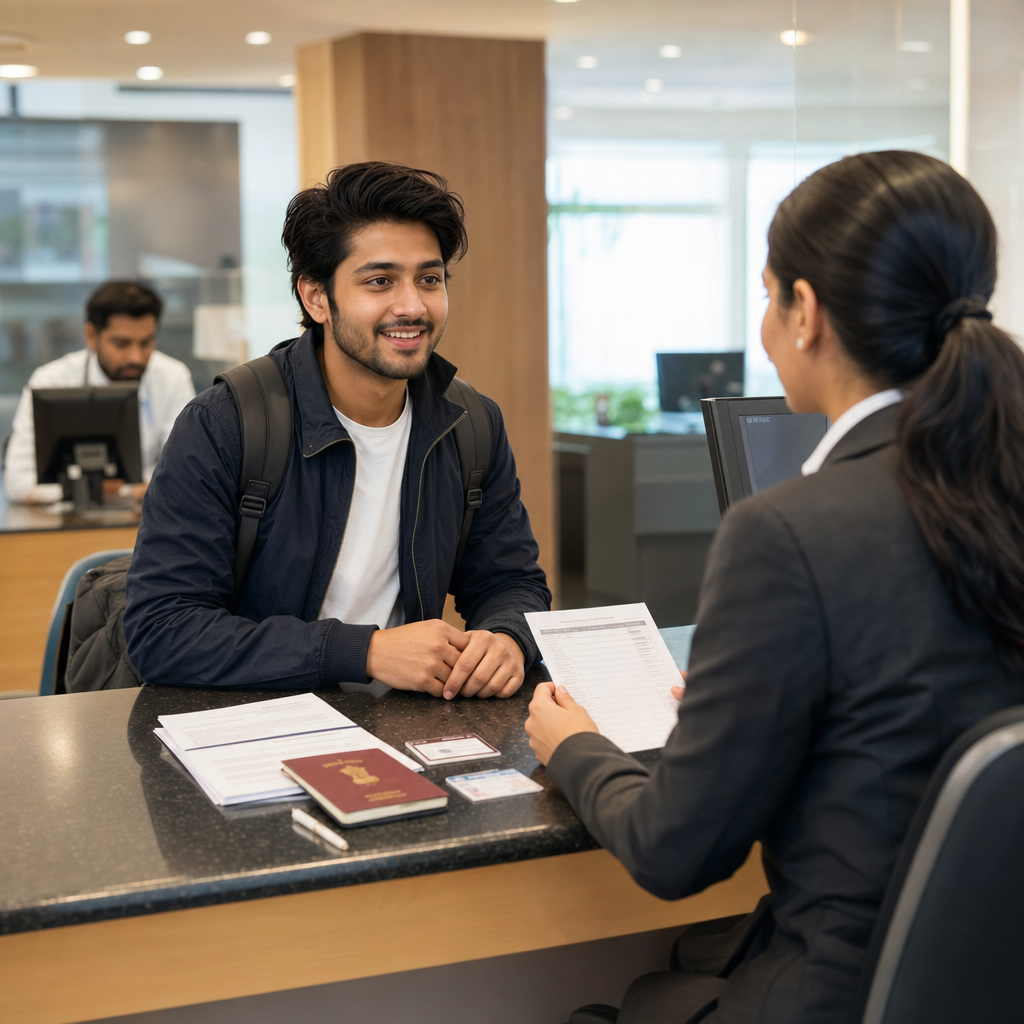
Your e-FRRO registration should be finalized within 14 days of your arrival if your Student Visa is valid for more than 180 days (studyinindia.gov.in). I once witnessed a Nepali student delayed for three weeks because of a mismatch between their passport and acceptance letter. Check every character before uploading. To establish an NRO account for banking purposes, you need to submit your passport, student visa, admission letter, and evidence of Indian address (see Edu / RBI Guidelines). Here is a comparison of the top banks:
| Bank | Minimum balance | Notes |
|---|---|---|
| SBI | ₹1 lakh (metro) | Widest branch network |
| HDFC / ICICI | ₹10,000 | Better digital platforms |
An advanced student can assist you with it in just a few hours. That is the aim of these networks.
What it costs to live as a student
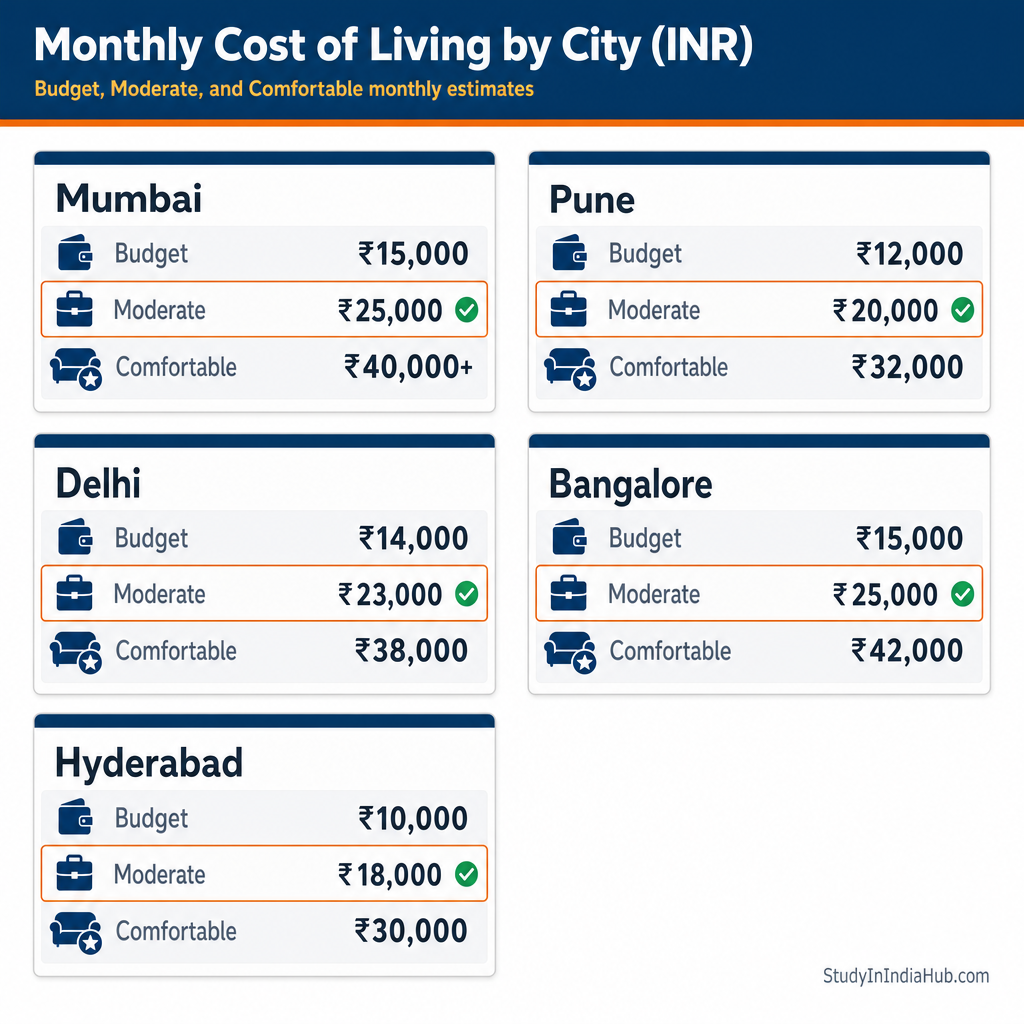
Your monthly costs in India vary between ₹14,000 and ₹42,000, depending on the city and your way of living. That excludes tuition (Educations.com, Estimated compilation, Bangalore). The element that puzzles people isn't the tuition. It’s the cash inflow for the initial month. You'll need a buffer for security deposits, generally ranging from one to three months' rent.
| City | Budget (Minimal) | Moderate | Comfortable |
|---|---|---|---|
| Delhi | ₹14,000 | ₹23,000 | ₹38,000 |
| Bangalore | ₹15,000 | ₹25,000 | ₹42,000 |
| Mumbai | ₹17,000–₹32,000 | ₹25,000–₹35,000 | ₹40,000+ |
| Pune | ₹16,000–₹25,000 | ₹22,000–₹30,000 | ₹35,000+ |
| Hyderabad | ₹10,000–₹12,000 | ₹18,000–₹22,000 | ₹30,000+ |
Monthly data compiled from Numbeo cost of living details for Bangalore and Delhi.
Accommodation is your biggest expense
- Delhi: campus hostel ₹5,000–₹12,000; private PG ₹8,000–₹18,000 (NoBroker)- Mumbai: PG ₹8,000–₹20,000, often at the upper end near the University of Mumbai (mu.ac.in)- Pune: PG ₹6,000–₹15,000- Hyderabad: shared accommodation with meals and utilities included, ₹4,000–₹6,000 (Wise) Hostels and PGs often bundle utilities and meals into one payment. That’s why I urge students to concentrate on them at first.
Food, transport, and utilities
- Mess plan: ₹3,000–₹5,000/month in Delhi or Mumbai, which is much cheaper than eating out - Dining out: ₹5,000–₹12,000 in Mumbai, ₹5,000–₹10,000 in Pune - Transport: ₹1,000–₹3,000/month for metro or bus travel - Utilities + phone: ₹1,500–₹2,500 for electricity, water, and internet in a shared flat; ₹300–₹600 for a mobile data plan (Memorable India) - Recreation and reading: set aside ₹2,000–₹5,000 for leisure activities, movies, and hobbies. Most students I advise eat poorly during the week and go out for meals on the weekends. The annual costs at state universities and public medical colleges vary between ₹1,20,000 to ₹2,40,000 (BrainGain Magazine).
Plan for zero income
It is prohibited to work on a student visa. Internships need university authorization, while standard employment is not allowed. Prepare your entire monthly budget before you arrive, since you won’t have the option to increase it with a part-time job.
Challenges to expect and how to settle in faster
The major initial shock typically affects most students in the first two weeks, not just on the first day. Your housing and visa will be organized. You will begin the FRRO process and find that the documentation does not match your expectations. Submit the order accurately, and you’ll prevent a three-week delay. We once helped a graduate student who faced a three-week setback. The address listed on their lease did not match the one in their acceptance letter. That inconsistency triggered a worry for the application.
Common Mistakes to Avoid
Adjusting to student life in India requires a transition period. Here are the errors I observe each year, along with ways to prevent them.
Underestimating the cultural and lifestyle adjustment
Many students arrive expecting their home routine to transfer over. It won’t. Food, weather, and cultural traditions differ from region to region. Research your specific city before you get there. Start with small modifications. Experience regional dishes gradually, learn some phrases in the local language, and interact with student groups from the beginning. The students who adapt swiftly stay curious instead of yearning for home.
Submitting incomplete or incorrect application documents
The primary cause of application delays or rejections is this. Indian universities impose stringent criteria for verified transcripts, valid passports, and notarized educational records. Check every document against the authorized checklist. Secure notarized copies well in advance. Keep copies in both electronic and tangible forms. One missing stamp could put your entire admission process at risk.
Missing key deadlines in the registration and visa process
Deadlines pile up rapidly: admission verification, visa procedures, FRRO registration, and hostel allocations. Skip one, and the others fall like dominoes. Make a calendar that features all dates and set reminders for two weeks prior. The 14-day FRRO timeframe especially perplexes people. Consider it essential.
Frequently Asked Questions
How long does the visa process actually take?
Generally, it requires 5–6 business days for the majority of applications. The duration often varies depending on your nationality and the requirements of the mission (Indian Student Visa). The most significant mistake we observe is booking a flight for the seventh day. When applying from a country that needs extra security clearance, the process may take much longer than a week. Ensure your passport, visa copy, and university letter are ready prior to making a reservation.
Can I work while studying in India?
Absolutely not. The S-1 student visa prohibits any off-campus employment or compensated internships (Indian Student Visa). Should you be caught working, you may confront immediate visa revocation and expulsion by the FRRO. What occurs if my passport name is different from my admission letter? Your FRRO registration could be delayed or denied. Make certain that every document, from your Bonafide Certificate to your visa sticker, corresponds accurately with your passport. If there is a difference, secure an affidavit or updated letter from your university's International Students Centre (ISC) before starting the process. What are the monthly living costs in a large city? Do not estimate rent on your own. The monthly mess fee of ₹3,000–₹5,000 catches students off guard (University of Mumbai). The first month also rises because of deposits and enrollment.
| Expense | Mumbai (INR/month) | Pune (INR/month) |
|---|---|---|
| On-campus hostel | ₹5,000 – ₹15,000 | ₹4,000 – ₹12,000 |
| PG accommodation | ₹8,000 – ₹20,000 | — |
| Food (mess) | ₹3,000 – ₹5,000 | — |
| Eating out | ₹6,000 – ₹12,000 | — |
| Transport pass | ₹500 | — |
(Compiled estimate, Mumbai, Compiled estimate, Pune, University of Mumbai)
Is off-campus always cheaper than a hostel?
Not positive. In Mumbai, PG stays range from ₹8,000 to ₹20,000, often surpassing hostel rates. A 1-bedroom rental in the city center costs ₹60,778 (Compiled estimate). Assess the complete package. A place that appears cheaper may actually cost more when you include travel and food expenses. How much money must I show for my visa? India does not require a specific "blocked account." Yet, be ready to prove availability of $15,000–$25,000 for annual living expenses (Indian Student Visa). That figure falls short of the £1,171/month required outside London in the UK, or CA$22,895 including first-year tuition in Canada (IDP). The consular officer checks a bank statement that contains first-year tuition and living expenses.
About the Author
Priya Sharma has helped over 2,000 international students navigate the Indian university application and visa processes since 2018. She started at SPPU's International Centre managing applications from more than 40 countries, then transitioned to StudyInIndiaHub.com to offer similar assistance online. Her attention is on visa documents, FRRO registration, and distinct admission requirements for various nations.
How We Researched This Article
Each article is checked against primary sources and evaluated by education professionals with direct experience in international student admissions. We obtain our information from official university websites, NAAC/NIRF databases, government visa portals, Numbeo living cost statistics, and direct contact with the international student offices of universities. Currency conversion rates updated every day. Weekly update on the cost of living. Quarterly assessment of university information.
Sources
- educations.com
- immitalks.com
- MEA India
- e-FRRO Portal
- RBI / DNA India
- Study in India
- cdnbbsr.s3waas.gov.in
- Study in India
- BITS Pilani
- Bureau of Immigration
- npti.gov.in
- Gloroots
- Careers360
- SPPU International Centre
- Compiled estimate, Mumbai
- Compiled estimate, Pune
- Colleges Nepal
- Mumbai University
- flavor365.com
- NoBroker
- Numbeo Bangalore crime
- Numbeo Delhi crime
- Numbeo Pune crime
- Numbeo Mumbai crime
- Memorable India
- India Someday
- Study in India FRRO
- Trip.com
- Leverage Edu / RBI Guidelines
- Compiled estimate, Bangalore
- Compiled estimate, Delhi
- Wise
- BrainGain Magazine
- [Edma